Most of the liqueurs in Moon Men’s cocktails are made by the bar team rather than bought from industrial brands like Giffard or Bols. The list is long: the bar’s own Moon Men Gin, sweet and dry vermouth, blue curaçao, orange liqueur, elderflower, white cacao, coffee, white crème de menthe, gentian, sloe gin, absinthe, limoncello and even a cheese liqueur. To make them, the bartenders use infusion, sous vide, nitrous siphons, fat-washing and oak ageing.
This article explains each technique in plain language and points to the drinks on the menu that use them. Recipes and ratios are the bar’s trade secret, so you will not find numbers here.
Why does Moon Men make its own liqueurs?
Flavour first. An industrial liqueur is designed to work in any bar in the world, so its taste is “average” and usually quite sweet. Making their own lets the bartenders tune sweetness, bitterness and aroma to the story of each drink.
Second, Vietnamese ingredients. Nobody sells a royal tea liqueur, a young rice syrup or a vermouth infused with sweet grass tea. If you want them, you make them.
Moon Men still uses premium bottled liqueurs where they are the best choice, such as Luxardo, Disaronno or Choya, but the menu’s own voice comes from the house-made bottles.
Which liqueurs are made behind the bar?
- Moon Men Gin, the house gin, with juniper, coriander seed, orange and lemon peel, ginger and cardamom. It is the base for most of the Gia Đình Kỳ Quái collection and many British and modern classic drinks.
- Sweet and dry vermouth, built on wine from Đà Lạt with herbs such as mugwort, rosemary, thyme, bay leaf and chamomile.
- Blue curaçao, orange liqueur, white cacao, a neutral spirit with orange peel or cacao nibs.
- Elderflower, light white-flower aroma.
- Gentian, bitter gentian root; one version is further infused with Vietnamese royal tea.
- Absinthe, with mugwort, star anise, licorice and herbs.
- Sloe gin, sloe berries in gin, then rested with charred oak.
- Coffee liqueur, white crème de menthe, limoncello and a cheese liqueur built on whisky.
Alongside them is a shelf of syrups and cordials: young rice, hibiscus, bitter melon, ambarella (cóc), lychee, chamomile and licorice, pepper and basil, molasses and more.
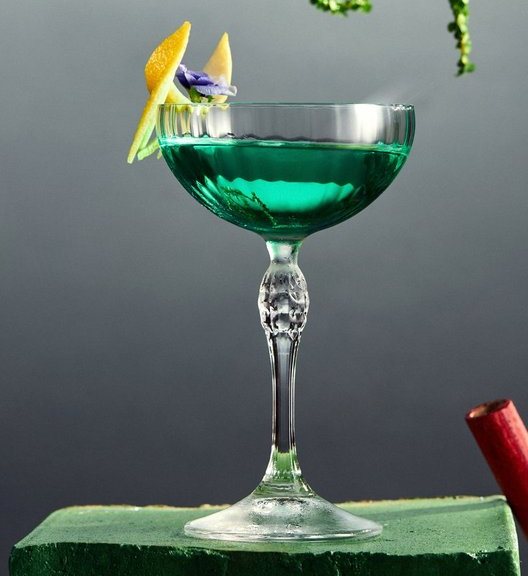
What are these techniques?
Infusion
The oldest method: put an ingredient in spirit and wait. At Moon Men, jasmine flowers go into gin for Under the Sun, shiitake mushrooms into Choya plum wine for the Umami Old Fashioned, and salted apricots (ô mai) into vodka for Tôi Mơ Màng. Flowers need a light touch; mushrooms take longer.
Sous vide
Spirit and ingredients are sealed in a bag and held in water at a low, steady temperature. The gentle heat extracts flavour faster than a cold infusion, and the sealed bag keeps the volatile aromas in. The gin, vermouths, absinthe, elderflower and many syrups at Moon Men are made this way.
Nitrous siphon
Spirit and ingredients go into a cream siphon, which is charged, shaken and vented. The pressure pushes the spirit into the ingredients and pulls flavour out very quickly. The curaçao, orange liqueur, white cacao, gentian and coffee liqueur follow this route.
Fat-washing
Mix a spirit with a fat, chill it until the fat sets, then strain it out. The spirit keeps the aroma and silkiness of the fat without being greasy. The Side Walk uses butter-washed pisco; the Artini Botanical uses a milk-punch-style variation with shiso.
Oak ageing
Some liqueurs and cocktails rest with oak for wood, vanilla and roundness. The house sloe gin goes through this step, and a few modern classics are aged in a small barrel before they are served.
Which drinks should I order to taste them?
- Light Blue Sky (305,000 VND): house curaçao, elderflower and a sweet-grass-tea vermouth on a pisco base. The clearest showcase of the bar’s liqueur work.
- Fromage Fusion (275,000 VND): house cheese liqueur with curaçao, orange liqueur and white cacao. The Fromage Fusion story.
- King’s Fashioned (395,000 VND): gentian infused with royal tea.
- Ping Pong (295,000 VND): sloe gin, house dry and sweet vermouth, smoky whisky.
- The Side Walk (295,000 VND): butter-washed pisco, cream and lime.
- Gentleman’s Sin (250,000 VND): house coffee liqueur and molasses syrup. Read more.
- Umami Old Fashioned (250,000 VND): plum wine infused with shiitake. Read more.
If you lean towards a direction (bitter, smoky, floral, herbal), tell the bartender. They will point you to a drink built on the right liqueur, or make a Bespoke cocktail (320,000 VND) to your taste.
Do house-made liqueurs taste different?
Usually less sweet and more aromatic. A drink with house elderflower smells fresher and tastes less sugary than one made with the bottled version. Vermouth built on Đà Lạt wine has its own fruity acidity. Because each batch is small, the flavour can shift very slightly with the season of the ingredients, which is part of working by hand.
If you want to hear more, sit at the bar. Those seats do not face the cathedral, but you will see the house bottles and can ask the bartenders directly.
FAQ
Which drinks use bottled liqueurs?
The Classic section (Margarita, Side Car, Negroni, Dry Martini, Black Russian…) follows the standard recipes, so it uses commercial liqueurs and vermouths such as Grand Marnier, Kahlua, Dolin or Noilly Prat. House-made liqueurs are concentrated in the signatures, the collections and the modern classics.
Are house-made liqueurs safe?
They are made from commercial base spirits and food ingredients, following the bar’s fixed process, and every bottle is labelled.
Can I see the recipes?
Recipes and ratios are Moon Men’s trade secret. The bartenders are happy to talk about ingredients and methods at the level of this article.
Where and when?
4th floor, 3 Au Trieu Street, Hoan Kiem, behind St. Joseph’s Cathedral. Open from 5 PM daily, Happy Hour 5 to 8 PM. See also Vietnamese-inspired cocktails in Hanoi and the Menu.